
Connected Market Strategy
Link neighbouring markets around real customer movement without flattening their differences.
A connected regional strategy has to account for very different buyers, from rural and agricultural customers to destination visitors, manufacturers, contractors and professional services. DotConnex builds each market page around the demand that actually exists there, then connects the region without duplicating it.
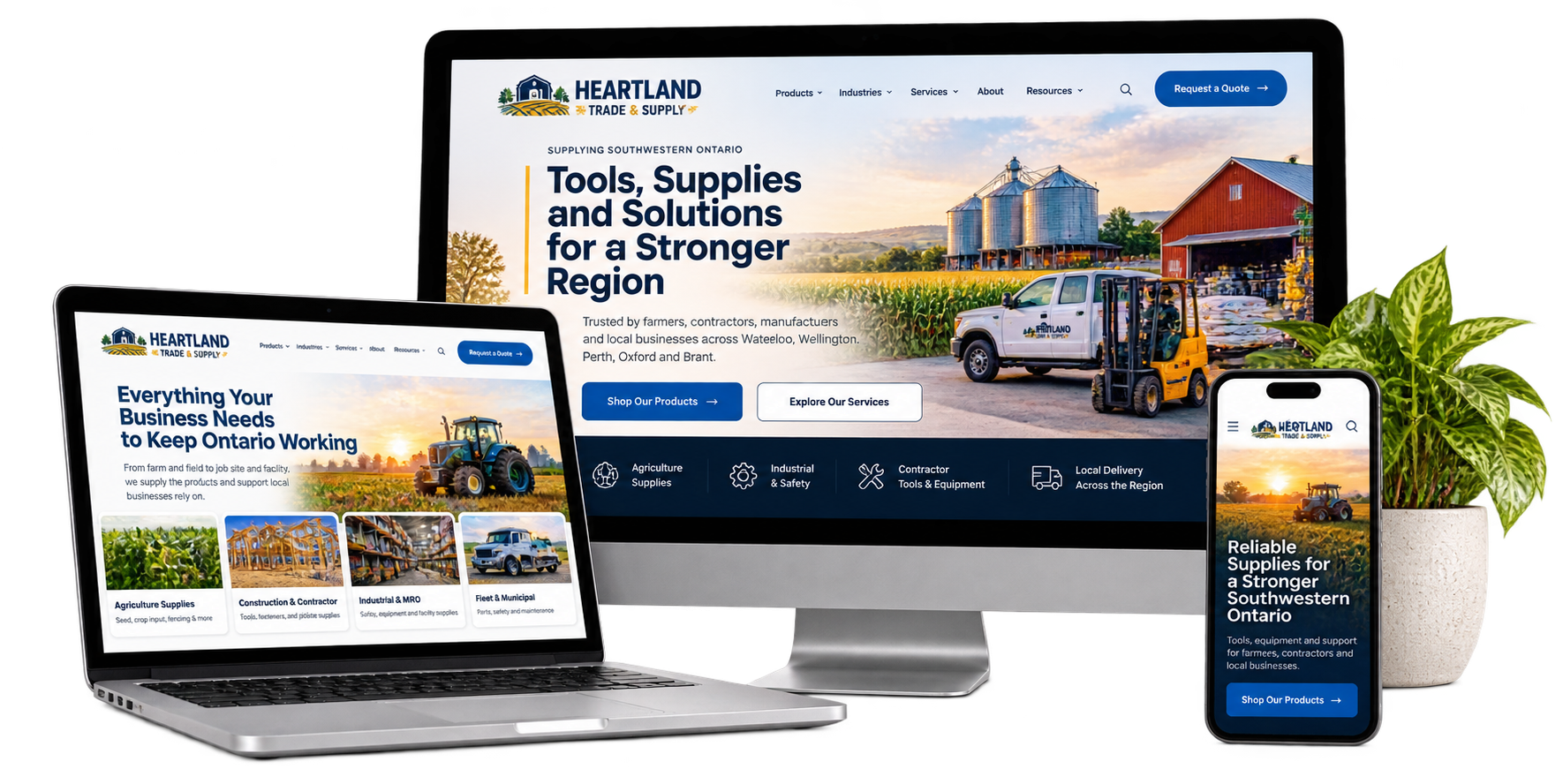
Each page below has its own market story, industries, search journeys, proof, nearby-market logic and FAQ content.
Arts, tourism, manufacturing and digital business
Explore Stratford →02Heritage downtown, local services and industry
Explore St. Marys →03Rural, agricultural, trades and township markets
Explore Wellesley →04Woolwich commercial, rural and local demand
Explore Elmira →05Visitor economy, retail, food and experiences
Explore St. Jacobs →06Destination, hospitality, events and local services
Explore Elora →07Year-round local, professional and commercial demand
Explore Fergus →08Manufacturing, logistics, agri-food and corridor growth
Explore Woodstock →09Advanced manufacturing, food production and distribution
Explore Brantford →This group sits between Waterloo Region, Guelph, London, Hamilton and broader Southwestern Ontario. Some businesses are intensely local. Others sell across counties, follow transportation corridors or serve specialized industries across the province.
The website should reflect the actual sales territory. A regional hub can connect related markets while service and industry pages carry the deeper expertise needed for broader organic growth.
DotConnex also has dedicated pages for the established nearby markets below. These remain separate because their economies, competition and search environments justify deeper standalone coverage.
The goal is coverage that helps customers and search engines understand the business, not a collection of interchangeable pages.
The hub explains how the markets connect, while the town pages address distinct local intent. It also creates a natural internal-linking layer between Ontario-wide navigation and individual communities.
The core DotConnex services remain consistent, but the market story, industries, search journeys, proof and surrounding-market strategy are tailored to each location.
No. A dedicated page should have enough real search intent, business relevance and unique content to justify its existence.
Yes, if it genuinely serves them. The best structure may combine strong service pages, selected location pages and broader industry content rather than creating a page for every municipality.
Not yet. The current rollout is completing every Ontario region first. The sitemap and central functions update will be handled once at the end so we do not repeatedly modify core files.
Whether the business depends on one town, a connected regional territory or customers across Ontario, DotConnex can build the website and search structure around that real opportunity.